What Is Cloud Computing and Why Does It Matter?
You use the cloud every day — when you check email, watch a film, save a photo, or open a document on your phone. But what is it really, and why has it changed the way we live and work? Here is a clear, simple explanation.
Think about how you used a computer twenty years ago. You installed programs from a disc and saved photos on your own hard drive. If that computer broke, your files could be gone. Everything lived on one machine, in one place.
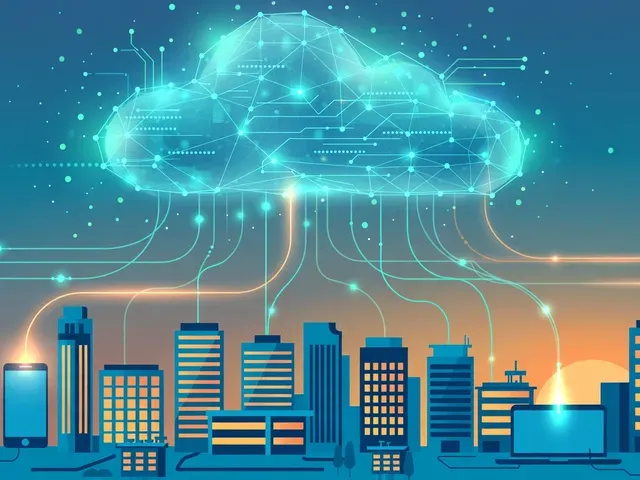
Cloud computing flips that idea. Instead of storing everything on your own device, you store it on powerful computers — called servers — owned by companies like Google, Microsoft, Amazon, and Apple. They sit in large data centres around the world, connected to the internet all the time. When you need a file or an app, your device simply connects to them. That network of remote servers is “the cloud.”
Cloud Computing in Simple Words
Cloud computing means delivering computing services over the internet instead of from your own computer. Those services include storing files, running software, sending email, streaming video, and even using artificial intelligence tools.
A helpful way to think about it is electricity. Long ago, every factory had to generate its own power. Today, you just plug into the grid and pay for what you use. The cloud works the same way for computing. You do not need to buy and maintain expensive servers. You plug into someone else’s — and use only what you need, when you need it.
How Does the Cloud Actually Work?
When you save a photo to Google Photos or iCloud, it is uploaded to a data centre and usually copied to more than one location, so if one server fails, another still has it. Open the app later — on a new phone, tablet, or laptop — and the photo appears in seconds. You see the same file everywhere because it does not live on any one device. It lives in the cloud.
The same happens with documents, music, and software. You sign in, the service recognises you, and all the heavy work — storing, processing, and securing — happens behind the scenes.

The Three Main Types of Cloud Services
You will often hear three terms. They sound technical, but the ideas are simple.
1. Software as a Service (SaaS)
This is the cloud most people know. You use complete software in your browser or app, and you do not install or maintain anything. Gmail, Google Docs, Microsoft 365, Zoom, and Netflix are all SaaS. You just log in and use them.
2. Platform as a Service (PaaS)
This is mainly for people who build apps and websites. Instead of setting up their own servers and tools, developers use a ready-made platform in the cloud to create, test, and launch their products faster.
3. Infrastructure as a Service (IaaS)
This is the most basic level. Companies rent virtual computers, storage, and networking from a cloud provider instead of buying physical machines. It gives them full control, without the cost of owning a data centre.
Public, Private, and Hybrid Cloud
A public cloud is shared by many customers — like Google Drive or Dropbox. A private cloud is used by one organisation only, for extra security or control. A hybrid cloud mixes the two, keeping sensitive data private while using the public cloud for everyday tasks.
A quick test: If you can start something on your phone and finish it on your laptop without sending yourself a file, you are using the cloud. That seamless experience is exactly what it was built for.
You Already Use the Cloud Every Day
Once you notice it, you see the cloud everywhere. WhatsApp backups, Spotify songs, and YouTube videos are all streamed or stored in the cloud, not on your phone. Online banking, food delivery apps, maps, and voice assistants depend on cloud servers too.

Why Does Cloud Computing Matter?
It saves money. A small business no longer needs to buy servers or hire a large IT team to get started. It can rent what it needs and grow step by step, paying only for what it uses.
It lets you work from anywhere. Files and tools are no longer tied to one office computer. Teams in different cities — or different countries — can work on the same document at the same time. This is what made remote and hybrid work practical at a large scale.
It keeps your data safer from everyday accidents. If your phone is lost or your laptop stops working, your photos and documents are not gone with it. They are still in the cloud, waiting for you to sign in on a new device. Good providers also back up data in multiple locations.
It grows with you. A website that gets ten visitors today and ten thousand tomorrow can handle the surge because the cloud can add capacity instantly. In the past, that kind of growth would have crashed a small server.
It brings powerful technology to everyone. Tools that once needed supercomputers — like AI image tools, video editing, and advanced data analysis — now run in the cloud and work on an ordinary phone or laptop.
Are There Any Downsides?
The cloud is not perfect. You need an internet connection for most services, so a poor connection can slow you down. Privacy and security also matter: you are trusting another company with your data, so using strong passwords, two-factor authentication, and trusted providers is essential. Costs can also creep up for businesses if they do not monitor what they use. None of these are reasons to avoid the cloud — they are reasons to use it wisely.
The Future Is in the Cloud
Cloud computing is still growing. Artificial intelligence, smart homes, online education, and telemedicine all rely on it. As more devices connect — from watches to cars — the cloud will become even more invisible and even more essential.
In the end, the cloud matters because it changed computing from something you own into something you simply use, wherever you are. It made technology cheaper, more flexible, and more accessible for everyone. Your digital life is no longer locked inside one device — and that is why the cloud is here to stay.
Enjoyed this simple explainer? Share it with someone who has always wondered what “save it to the cloud” really means.

No comments:
Post a Comment