The Evolution of Smartphones: What's Coming Next?
From a two-kilogram brick that could only make calls to a folding computer in your pocket — the smartphone has changed faster than almost any technology in history. Here is how we got here, and where it is heading next.
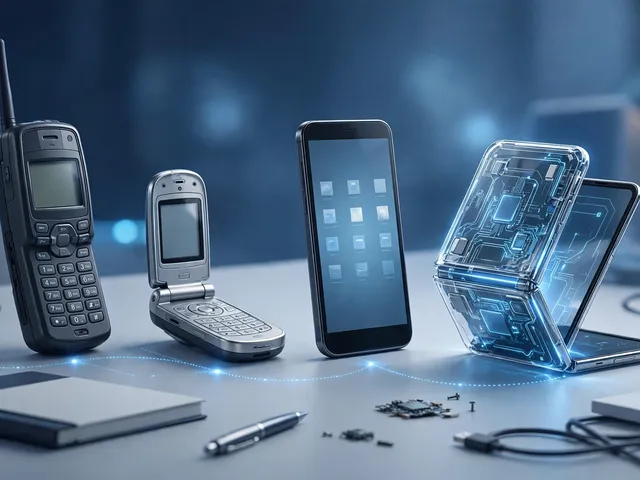
It is hard to believe that the first handheld mobile phone call was made just over fifty years ago, in 1973. The device weighed more than a kilogram, took ten hours to charge, and gave you about thirty minutes of talk time. Nobody at the time imagined that this heavy brick would one day shrink into a slim glass rectangle that could take photographs, navigate cities, translate languages, run a business, and entertain us for hours — all at once.
Today, more than five billion people carry a smartphone. For many of them, it is their first computer, their main camera, their bank, their office, and their connection to family. Understanding how smartphones evolved helps us understand where they are going next — because the next big change is already taking shape in laboratories and in the newest phones on shop shelves.
From Bricks to Buttons: The Early Years
The 1980s and 1990s were the age of the brick and then the flip phone. Phones got smaller, batteries lasted longer, and screens — still tiny and monochrome — began to show text messages. The arrival of SMS changed everything. Suddenly a phone was not only for talking; it was for writing, too. By the late 1990s, phones added simple games, calendars, and the first very slow mobile internet.
In the early 2000s, phones with colour screens and built-in cameras appeared. A grainy photo taken on a phone seemed like magic at the time. Business users carried devices with full physical keyboards, answering emails on trains and in airports. These were called "smartphones," but they were still complicated, expensive, and used mainly by professionals. The real revolution was still to come.
2007: The Touchscreen Changes Everything
The modern smartphone era began in 2007, when the first iPhone was launched. It replaced buttons and styluses with a large touchscreen you controlled with your fingers. A year later, the first Android phone arrived, and the app store model took off. Instead of buying software in a box, you could download a new tool, game, or service in seconds.
Through the 2010s, every part of the phone improved at remarkable speed. Screens grew bigger and sharper. Cameras went from one lens to two, three, and four, using software to produce portraits and night photos that once needed a dedicated camera. Fingerprint readers, then face unlock, made phones both safer and faster to open. Mobile internet moved from 3G to 4G, making video calls, streaming, and maps a normal part of daily life. The smartphone quietly replaced the camera, the music player, the GPS unit, the torch, the alarm clock, and, for many people, the wallet.

Where We Are Now: Foldables, 5G and AI
The phones of the mid-2020s look similar from the outside — a slab of glass and metal — but three big changes are under way. The first is shape. Foldable phones bend in the middle, opening into a small tablet for reading, multitasking, and video. They are still expensive and delicate compared with regular phones, but each generation is thinner, stronger, and cheaper.
The second change is speed. 5G networks, now common in most major cities, download a full film in under a minute and make cloud gaming and high-quality video calls feel instant. The third, and most important, change is intelligence. Modern phones carry dedicated AI chips that can summarise long articles, translate a conversation live, remove strangers from your photos, write a polite reply to an email, and answer questions about what is on your screen. The phone is moving from a tool you operate to an assistant that helps you think.
The pattern to notice: every generation of smartphones has removed a separate device from your bag — first the camera and music player, then the wallet and keys. The next generation aims to remove friction itself: fewer taps, fewer passwords, and fewer moments spent staring at the screen.
What's Coming Next?
So what will the phone of 2030 look like? Some changes are easy to predict. Batteries are finally improving, with new silicon-carbon cells already packing more energy into the same space, and researchers working on solid-state batteries that could last days. Cameras will keep getting smarter rather than just bigger, using AI to understand a scene instead of merely recording it. Screens may roll, slide, or stretch rather than fold, and truly bezel-free displays with cameras hidden underneath are already in testing.

The bigger question is whether the phone stays a phone at all. Smart glasses are improving quickly, and many experts believe the smartphone will gradually become the quiet computer in your pocket while glasses, watches, and earbuds handle what you see and hear. Satellite messaging, already available on some phones, will make "no signal" a thing of the past. And as AI assistants grow more capable, the app grid itself may fade: instead of opening ten apps, you may simply ask your phone to book, buy, remind, and organise — and it will.
There will be challenges, too. A phone that knows everything about you must protect that information. Devices that last longer and are easier to repair will matter more as people hold on to phones for four or five years instead of two. And the industry will have to prove that ever-smarter phones make life simpler, not more distracting.
The Bottom Line
The smartphone's story is one of constant reinvention: brick, flip, keyboard, touchscreen, foldable. Each step made the device more personal and more powerful. The next step — an intelligent, flexible, always-connected companion that increasingly works in the background — may be the biggest yet. Whatever shape it takes, one thing is certain: the small device in your pocket is not finished changing your life. In many ways, it has only just started.
