Wearables and New generation mobile devices
From the watch on your wrist to the foldable phone in your pocket, the devices we carry — and wear — are becoming smarter, more personal, and far better at looking after us.
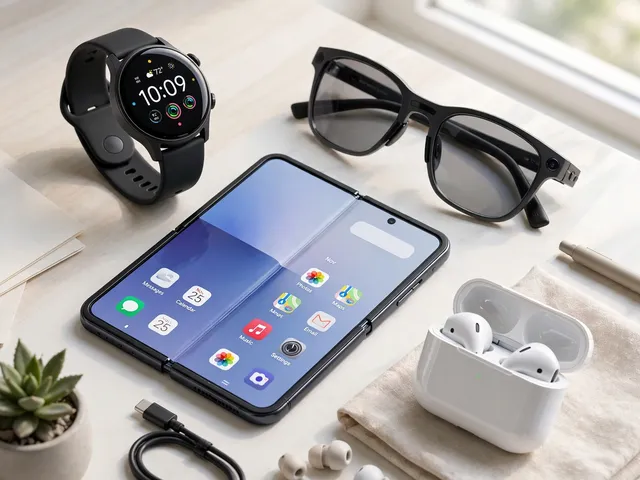
Ten years ago, a phone was something you picked up, used, and put down again. Today, technology stays with you all day. A watch counts your steps while you sleep-track through the night, earbuds translate a conversation in real time, and your phone unfolds into a small tablet when you need a bigger screen. Wearables and new generation mobile devices are not separate gadgets any more. Together, they form a quiet, connected layer around everyday life — helping with health, work, travel and entertainment without demanding your full attention.
This shift matters because it changes what a device is for. The newest products are less about raw speed and more about awareness: sensing how you are, understanding where you are, and offering the right information at the right moment, often before you ask.
What Counts as a Wearable Today?
A wearable is simply a computer designed to be worn on the body. The category now goes well beyond the fitness band. It includes smartwatches, smart rings, smart glasses, wireless earbuds with health sensors, and even smart clothing that tracks posture or muscle effort. What they share is constant, close contact with you — and that closeness is exactly what makes them useful.
Because a wearable sits on your skin, it can measure things a phone in your pocket never could: heart rate, blood oxygen, skin temperature, sleep stages and stress signals. Because it is always with you, it can nudge you gently — to stand up, to breathe, to head to bed — at the moment the nudge will actually help. The best wearables disappear into your routine. You forget you are wearing them, until the insight they surface genuinely changes a decision.
Smartwatches and Fitness Trackers: Your Health on Your Wrist
The smartwatch remains the most popular wearable, and for good reason. Modern watches track workouts with GPS, monitor heart rate and sleep, detect falls, and can even record an ECG or flag an irregular heartbeat for you to discuss with a doctor. Fitness trackers do much of the same in a lighter, cheaper form, often with battery life measured in weeks rather than days.

The real progress is in how this data is presented. Instead of overwhelming you with graphs, newer devices summarise readiness, recovery and sleep quality into simple scores, with plain-language advice: train hard today, take it easy, go to bed earlier. For many people, that small daily feedback loop does more for long-term health than any single workout plan. Watches have also become safety devices — sending an alert after a hard fall or a car crash, and letting you call for help when your phone is out of reach.
Beyond the Wrist: Rings, Glasses and Earbuds
Not everyone wants a screen on their wrist, and the market has answered. Smart rings pack sleep and recovery tracking into a band you barely notice, with no display to distract you. Smart glasses are finding their place too: discreet frames that take photos, play audio, show directions or translate text in your line of sight, powered by voice assistants you talk to naturally. Earbuds, meanwhile, have grown from music accessories into wearables in their own right — measuring heart rate during exercise, adjusting sound to your hearing, and cancelling noise intelligently as your surroundings change.
Each form factor suits a different life. The lesson is to choose the wearable you will actually keep wearing, because a simpler device worn daily beats a powerful one left in a drawer.
New Generation Mobile Devices: Phones That Do More
While wearables grew around the body, phones themselves have been reinvented. Foldable phones open into tablet-sized screens for reading, multitasking and video, then close back into a pocketable size. Others flip shut like classic phones, with a useful outer screen for quick checks. Displays are brighter and smoother, cameras use computational photography to rescue difficult shots, and on-device AI now summarises articles, transcribes calls, translates languages live and edits photos in seconds — often without sending your data to the cloud.

Connectivity has leapt forward as well. 5G, Wi-Fi 7, satellite messaging for emergencies and ultra-wideband for precise finding of lost items are becoming standard. Batteries last longer and charge faster, and phones increasingly act as the hub for everything else — unlocking your car, paying in shops, controlling your home and anchoring your wearables.
How Wearables and Phones Work Together
The magic is in the pairing. Your watch filters notifications so your phone can stay in your pocket. Your ring tracks sleep while your phone stays off the nightstand. Your glasses capture a moment hands-free, and your phone edits and shares it. Health data flows into one app, giving you — and, if you choose, your doctor — a fuller picture than any single device could offer. As AI assistants spread across all of them, the device you talk to matters less; the help simply follows you from wrist to ear to screen.
Buying advice
Start with one problem you want solved — better sleep, safer runs, fewer distractions — and buy for that. Check compatibility with your phone first, then battery life, then comfort. Expensive features you never open are worse than simple ones you use every day.
Battery, Privacy and Choosing Well
Two honest cautions. First, battery life still involves trade-offs: bright always-on displays and constant sensing drain small devices quickly, so expect to charge a full-featured watch often, and prefer longer-life trackers or rings if charging annoys you. Second, wearables collect intimate health data. Choose brands with clear privacy policies, keep sharing settings under your control, and remember that these devices support healthy habits — they do not diagnose medical conditions.
Wearables and new generation mobile devices are converging on a simple promise: technology that watches over the routine, so you can pay attention to the life in front of you. Chosen well, they do exactly that.
