Search

Showing posts with label Simple Living. Show all posts

Friday, November 27, 2026

Minimalism: How Living With Less Can Improve Your Life

Minimalism: How Living With Less Can Improve Your Life

A calmer home, a clearer mind, and more room for what actually matters — that is the quiet promise of owning less.
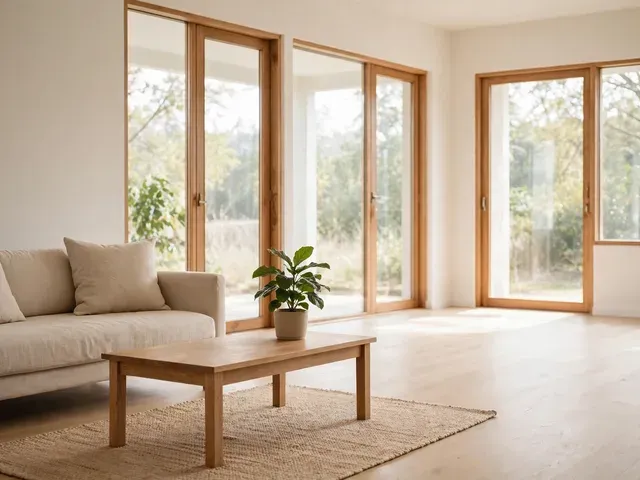
A bright, uncluttered minimalist living room with a simple sofa, a wooden table and a single plant
A minimalist living room keeps only what is useful and loved — and lets everything else go.

Open any cupboard in your home and be honest: how much of what is in there have you not touched in a year? For most of us, the answer is uncomfortable. We keep buying, storing and tidying things we barely use, and then wonder why we feel tired in our own homes.

That is exactly why so many people are turning to minimalism. At its heart, living with less is not about empty rooms or strict rules. It is about removing what does not serve you, so you have more time, money and energy for what does.

What Minimalism Really Means

Minimalism is often misunderstood as living with almost nothing. In reality, it simply means being intentional. You keep the things that add value to your life, and you let go of the rest.

There is no magic number of possessions, and no two minimalists live the same way. A family of five and a single student can both live minimally — what matters is that everything they own has earned its place.

Think of it as editing, not depriving. You are not losing things; you are choosing what deserves your space and attention.

How Living With Less Can Improve Your Life

The benefits show up faster than most people expect. Within a few weeks of clearing clutter, daily life starts to feel noticeably lighter.

  • Less stress at home. A tidy, open space is easier on the mind. When surfaces are clear and everything has a home, your brain stops processing visual noise all day.
  • More money in your pocket. Once you stop buying things on impulse, the savings add up quickly — money you can put towards travel, learning, or simply peace of mind.
  • More time for yourself. Fewer possessions mean less cleaning, less organising and less time spent looking for things. Many people win back hours every week.
  • Clearer decisions. From choosing what to wear to deciding how to spend an evening, fewer options means less decision fatigue and more confidence.
  • A lighter footprint. Buying less and wasting less is kinder to the planet, and it feels good to know your home is not built on excess.
A small, neatly organised wardrobe with a few essential clothes in neutral colours
A smaller wardrobe of clothes you actually wear makes getting dressed simple — and strangely enjoyable.

7 Simple Steps to Start Living With Less

You do not need a free weekend or a hired skip to begin. Small, steady steps work far better than one dramatic clear-out.

  1. Start with one drawer. Pick the smallest, most annoying drawer in your home. Empty it completely, keep only what you use, and let the rest go today.
  2. Use the one-year rule. If you have not used something in the last twelve months, you almost certainly do not need it. Be honest, and be kind to your future self.
  3. Try one in, one out. Every time something new comes into your home, something similar leaves. This one habit stops clutter from quietly creeping back.
  4. Clear your wardrobe next. Keep the clothes that fit, feel good and get worn often. Donate the rest, and enjoy how easy mornings become.
  5. Create a donation box. Keep a box by the door for things you decide to release. When it is full, drop it off — no second-guessing at the door.
  6. Pause before you buy. Wait 48 hours before any non-essential purchase. Most of the time, the urge passes and your money stays where it belongs.
  7. Declutter your phone too. Delete unused apps, clear old photos and unsubscribe from emails you never read. Digital clutter weighs on the mind just as physical clutter does.

Minimalism Is About More Than Your Home

Once your space feels calmer, the idea tends to spread. People find themselves simplifying their schedules, saying no to commitments that drain them, and protecting quiet time in their week.

It can change how you work, too. A clear desk, a shorter to-do list and fewer distractions make it easier to focus on one thing at a time — and to actually finish it.

A calm, minimalist desk with a laptop, a warm drink and a small plant
A clear desk and a short to-do list: minimalism at work makes focus feel effortless.

Most importantly, living with less shifts what you value. Instead of chasing the next purchase, you start investing in experiences, relationships and rest — the things people actually remember at the end of a year.

Two Mistakes to Avoid When You Begin

The first mistake is trying to do everything at once. A whole-house clear-out in a single weekend usually ends in exhaustion and half-finished rooms, so work slowly, one small area at a time, and celebrate each finished space.

The second is comparing your home to perfect photos online. Minimalism is not a look to copy; it is a way of living that should fit your family, your habits and your budget. Your version only needs to work for you.

Quick Recap

  • Minimalism means keeping what adds value and letting go of the rest — there is no perfect number.
  • Living with less reduces stress, saves money, and gives you back hours every week.
  • Start tiny: one drawer, the one-year rule, and one in, one out.
  • The calm spreads beyond your home into your schedule, your work and your phone.
  • The goal is not less for its own sake — it is more of what matters.

You do not have to transform your whole home this weekend. Clear one drawer, donate one bag, and notice how it feels to walk past that space tomorrow morning. Small steps, repeated gently, are how a simpler life is built.

What is the one area of your home you would love to simplify first — your wardrobe, your kitchen, or somewhere else entirely? Tell us in the comments; your starting point might be exactly the encouragement someone else needs today.

And if this post gave you a little nudge towards a calmer home, please share it with a friend or family member who is always saying they have too much stuff. It might be just what they need to begin.

Saturday, October 31, 2026

Minimalism as a Philosophy

Minimalism as a Philosophy

Category: Philosophy | Published: March 2026 | Reading Time: 11 min

Minimalism as a Philosophy

In modern consumer culture, minimalism is frequently co-opted and reduced to a superficial aesthetic: stark white interior walls, expensive designer Scandinavian furniture, monochromatic wardrobes, and Marie Kondo decluttering tutorials. While having an uncluttered physical space brings genuine psychological relief, treating minimalism merely as a home design trend misses its profound, radical core. At its heart, Minimalism is an Ancient Philosophy of Existential Liberation.

For thousands of years, across Greco-Roman antiquity, ancient India, Taoist China, and Transcendentalist America, humanity's greatest philosophical luminaries recognized a timeless psychological trap: the relentless accumulation of external possessions, social accolades, and digital distractions does not expand human happiness; it imprisons the soul. Far from being an exercise in deprivation, authentic philosophical minimalism is an intentional act of subtraction designed to make space for what truly matters. Understanding this life-altering philosophy requires examining classical historical lineages, analyzing the psychological mechanics of consumerism, dissecting modern digital minimalism, balancing material simplicity with intellectual depth, and practicing intentional living.

Philosophical Lineages of Minimalist Thought Across History

Tracing how distinct philosophical traditions and ancient thinkers conceptualized the deliberate rejection of excess:

Philosophical Tradition Key Thinker / Figure Core Philosophical Tenet Modern Practical Application
Greco-Roman Cynicism Diogenes of Sinope (c. 412 BCE) Radical self-sufficiency (autarkeia); nature over social conventions Rejecting artificial status symbols and social posturing
Stoicism Seneca, Epictetus, Marcus Aurelius Distinguishing what is within control; practicing voluntary poverty Insulating mental peace against financial fluctuations and material loss
Buddhism (The Middle Way) Siddhartha Gautama (The Buddha) Non-attachment (anatta/upādāna); craving (tanhā) as root of suffering Decoupling identity and self-worth from material acquisitions
Taoism Lao Tzu & Chuang Tzu Simplicity (Pu - the uncarved block); effortless action (Wu Wei) Removing unnecessary life complexity, busywork, and artificial ambition
American Transcendentalism Henry David Thoreau (Walden) "Simplify, simplify!"; living deliberately and cultivating nature Resisting modern corporate rat-races to reclaim personal time and freedom
Modern Digital Minimalism Cal Newport Focusing online time on a small number of carefully selected activities Reclaiming attention spans from algorithmic social media feeds

The Hedonic Treadmill and the Pathology of Consumerism

To understand why philosophical minimalism is so urgent today, one must examine the neurological flaw that industrial consumer capitalism relentlessly exploits: the Hedonic Treadmill:

  • Rapid Adaptation: When an individual buys a new car, smartphone, or luxury outfit, the brain experiences a brief spike of dopamine. However, within weeks or days, hedonic adaptation resets the baseline. The novelty fades, the item becomes ordinary, and the individual craves the next purchase to feel that fleeting rush again.
  • The Misery of Comparison: Modern advertising and social media feeds are engineered to manufacture artificial discontent, convincing consumers that their current lives, bodies, and homes are fundamentally inadequate unless they purchase the latest promoted product.
  • Trading Life Energy for Clutter: In his masterpiece Walden, Henry David Thoreau noted that the real cost of any item is not its dollar price tag, but the exact amount of human life energy required to earn that money. Spending forty hours a week working at an unfulfilling job merely to pay for storage units, subscriptions, and decorative trinkets is an existential tragedy.
Diogenes and the Wooden Bowl: The Greek Cynic philosopher Diogenes lived on the streets of Athens inside a large discarded ceramic wine jar, owning only a tattered cloak, a walking staff, and a small wooden bowl for drinking water. One morning, seeing a young boy drinking from a fountain with cupped hands, Diogenes smiled, reached into his sack, and flung his wooden bowl away, declaring: "A child has taught me that I still carried superfluous luggage!"

The Stoic Practice of Voluntary Discomfort

The Roman Stoic philosopher Seneca, one of the wealthiest men in the Roman Empire as advisor to Emperor Nero, recognized that wealth becomes a psychological prison if one lives in terror of losing it. To preserve inner freedom, Seneca prescribed a radical exercise:

  • Practicing Poverty (Praemeditatio Malorum): "Set aside a certain number of days," Seneca wrote to his friend Lucilius, "during which you shall be content with the scantiest and cheapest fare, with coarse and rough dress, saying to yourself the while: 'Is this the condition that I feared?'"
  • Eradicating Fear of Loss: By intentionally fasting, sleeping on the floor, and wearing plain clothing periodically, the Stoic proves that human happiness requires remarkably little physical luxury. When you realize you can thrive on water, bread, and simple shelter, you become completely immune to financial intimidation, workplace blackmail, and social embarrassment.

Digital Minimalism: Guarding the Sacred Asset of Attention

In the twenty-first century, the most dangerous clutter accumulating in human lives is no longer physical objects in attics or closets; it is digital clutter invading our conscious minds:

  • The Attention Economy: Trillion-dollar tech corporations employ thousands of behavioral engineers to keep eyes glued to smartphone screens, harvesting personal attention to sell targeted advertising. Endless push notifications, algorithmic outrage loops, and infinite scroll feeds fragment human concentration.
  • Reclaiming Solitude: Digital minimalism, as articulated by computer science professor Cal Newport, is the deliberate choice to clear out digital noise. By deleting non-essential social apps, turning off phone notifications, and scheduling long blocks of disconnected focus, individuals reclaim deep thought, uninterrupted reading, and authentic face-to-face human connection.
The "Clutter is Unmade Decisions" Rule: Physical and mental clutter represents delayed decisions. That pile of unread books, closet of unused clothes, or inbox of 5,000 unread emails drains cognitive energy because your brain registers each item as an open, unresolved task. Radical decluttering frees up finite cognitive RAM!

Quick recap

Minimalism as a philosophy is not a rigid dogma of counting your possessions or living in sterile, empty white rooms; it is a profound declaration of personal independence. By drawing wisdom from ancient Stoic resilience, Buddhist non-attachment, Taoist simplicity, and modern digital hygiene, individuals learn to subtract the trivial so that the essential may shine. When you liberate yourself from the endless treadmill of acquisition, you discover the ultimate luxury: a peaceful mind, purposeful work, and true existential freedom.

Ads