The Most Interesting Scientific Discoveries of Recent Years
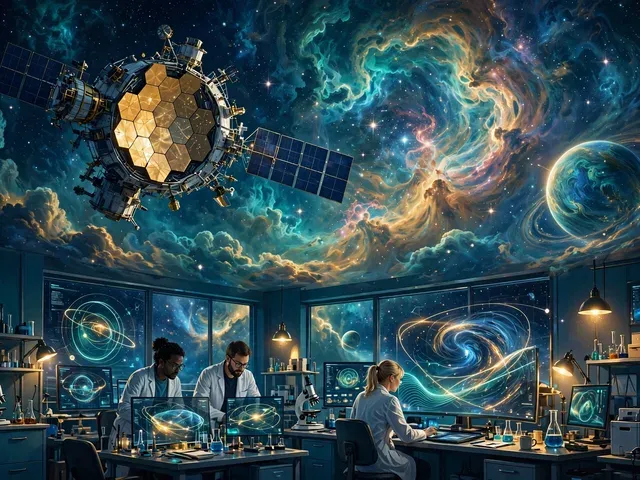
Every few years, science gives us a moment that changes how we see the world. In the last few years, there have been many such moments at once — in space, in medicine, in energy and inside the human brain. None of them arrived by luck. Each one came after decades of patient work, and each one is already opening doors that once seemed firmly closed.
What makes this period so exciting is the way different fields are advancing together. Better telescopes produce more data, faster computers make sense of it, and new laboratory tools turn understanding into real treatments. Here are the discoveries that stand out most.
A New Eye on the Universe
The James Webb Space Telescope has completely changed astronomy since it began sending back images. Built to see infrared light, it can look through clouds of dust and detect the faint glow of the very first galaxies that formed after the Big Bang. Astronomers expected young galaxies. What surprised them was how many it found, and how bright some appear — a puzzle that is making scientists rethink how quickly the early universe grew up.
Webb is also studying planets around other stars in a way that was impossible before. By analysing the light that passes through a distant planet's atmosphere, it can detect water vapour, carbon dioxide and other chemicals. For the planet K2-18 b, researchers reported carbon-bearing molecules in its atmosphere, raising genuine excitement about worlds that might have liquid oceans. Gravitational wave detectors, meanwhile, keep listening to ripples in space-time from colliding black holes, giving us a completely new sense for observing the cosmos.
Reading and Rewriting the Code of Life
In biology, the headline story is our growing ability to read, predict and edit life itself. CRISPR gene editing, which began as a curiosity about how bacteria defend themselves, has moved into the clinic. The first CRISPR-based treatment for sickle cell disease and beta thalassaemia has been approved in several countries. For people with these painful inherited conditions, a one-time treatment made from their own edited cells offers what medicine never could before: the chance of a lasting cure.

Alongside this came a quieter revolution with enormous reach. An artificial intelligence system called AlphaFold solved one of biology's hardest problems: predicting the three-dimensional shape of a protein from its sequence alone. Protein shapes decide how medicines work, how diseases develop and how enzymes do their jobs. Researchers now have predicted structures for more than 200 million proteins, freely available. Work that once took years can now begin in an afternoon, speeding up the search for new drugs, vaccines and enzymes that can break down plastic waste.
The Brain, Mapped and Listened To
Neuroscience has had its own landmark years. Scientists have produced the most detailed maps yet of the human brain, charting thousands of cell types and how they differ from person to person. In a sample of brain tissue no bigger than a grain of sand, researchers mapped tens of thousands of cells and around 150 million connections — a wiring diagram that will take years to fully understand.
Just as remarkable is what brain–computer interfaces are now doing for people. In recent trials, people who had lost the ability to speak because of paralysis or motor neurone disease were able to communicate again through implants that decode brain activity into words on a screen, in some cases at speeds approaching natural conversation. Voice synthesis can even give the words back in a voice resembling the person's own. These systems are still experimental and raise real questions about privacy and consent, but for those taking part, the benefit is profound: being heard again.
Energy from a Star on Earth
For decades, fusion power — the reaction that powers the Sun — was famous for always being thirty years away. That joke is getting harder to tell. In a landmark experiment, scientists at a national laboratory in the United States achieved fusion ignition: a reaction that produced more energy than the laser energy delivered to the fuel, a threshold the field had chased since the 1960s. The result has since been repeated with higher yields.

No one is plugging a fusion plant into the grid tomorrow. Huge engineering challenges remain, from materials that can survive years of intense heat to making reactions run steadily and affordably. But ignition changed the question from “can this ever work?” to “how do we build it well?” Private firms now race alongside public laboratories, and record-breaking plasma runs suggest real momentum rather than hype.
Small Discoveries with Big Lessons
Not every important discovery needs a telescope or a reactor. Ancient DNA from bones and even soil has rewritten human history, showing how populations mixed and migrated — and revealing vanished relatives such as the Denisovans, known first from a single finger bone. Research on the microbiome, the trillions of microbes living in and on us, keeps finding links between gut bacteria and digestion, immunity and mood. And precise satellite and ocean measurements now show exactly where ice is being lost and seas are rising, turning vague warnings into local forecasts people can plan with.
Why These Discoveries Matter to You
It is easy to file science news under “interesting, but not my life.” Yet look where these breakthroughs lead. Gene editing points toward cures for diseases families have carried for generations. Protein prediction already helps design medicines faster and more cheaply. Brain interfaces restore independence. Fusion, if it matures, offers abundant energy without carbon emissions. Even distant galaxies matter practically: detectors and software built for astronomy routinely end up in hospitals, phones and weather forecasts.
Perhaps the deepest lesson is about how discovery happens. Almost every breakthrough here combined fields — biology with computing, astronomy with engineering, medicine with materials science — and rested on work by people who knew they might never see the final result. Science at its best is a relay race across generations. Right now the baton is moving fast, and the next surprising headline is probably already sitting, unnoticed, in someone's data.
