Creativity & Technology
The Future of Digital Innovation and Human Creativity
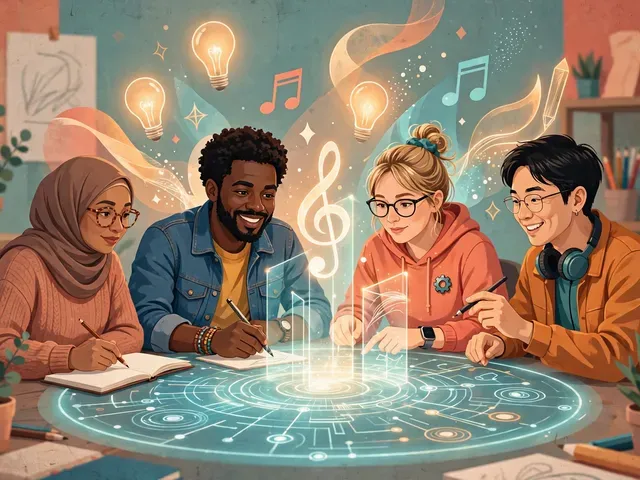
Every generation gets a tool that changes what it means to create — the printing press, the camera, the personal computer. Ours is intelligent software that can draft, draw, compose and code alongside us. The real question is not whether it will change creativity, but how we choose to create with it.
For most of history, turning an idea into something real demanded years of training and expensive equipment. A song needed a studio, a film needed a crew, and a new business needed a team of specialists before its first customer arrived. Digital innovation has been quietly dismantling those barriers for decades, and artificial intelligence is now dismantling the last of them: the blank page. A teenager with a phone can prototype an app, illustrate a story or produce a song in a single afternoon. That shift is exhilarating and a little unsettling — and still widely misunderstood, because the technology is not replacing human creativity. It is changing where creativity happens.
Tools That Put Creation in Everyone's Hands
Not long ago, professional tools belonged to professionals. Editing software cost as much as a car, recording studios charged by the hour, and publishing meant persuading a gatekeeper to say yes. Today, capable creative tools live in a browser tab, many of them free, and distribution is a button anyone can press. A potter in a small town can sell to customers on three continents. A teacher can turn a lesson into an animated video over a weekend. A retired carpenter can publish a lifetime of woodworking knowledge to an audience of millions.
This matters because talent has never been rare — opportunity has. When the cost of making something falls close to zero, far more people get to try, fail, improve and occasionally produce something wonderful. The average quality of what floods our feeds may be debatable, but the best work now comes from a vastly larger pool of creators, including voices the older systems would never have let through the door.
When Machines Become Creative Partners
Artificial intelligence adds a new twist: the tool now talks back. Ask a writing assistant for ten openings to a story and it offers them in seconds — most ordinary, one or two genuinely surprising. Ask an image model to show your sketch in watercolour, in neon, in the style of a woodcut, and you can explore in minutes directions that once took days. Musicians hear a melody arranged for strings before hiring a single player; designers test a hundred layouts before lunch.

The pattern that emerges is not automation but conversation. The human supplies taste, intent and judgement — the sense of what the work is for and whether it is any good. The machine supplies speed, stamina and variation. Used well, it feels less like pressing a button and more like brainstorming with a tireless partner who has read everything and fears nothing. The craft shifts from producing every stroke by hand to directing, selecting and refining — skills that are creative in their own right.
New Forms That Did Not Exist Before
Every medium eventually invents art forms its creators never imagined, and digital tools are no exception. Interactive stories change with each reader. Games grow worlds as players explore them. Musicians perform with collaborators on other continents while audiences remix the performance as it happens. Short-form video has created a whole grammar of storytelling — the three-second hook, the visual punchline — that a film graduate of 1990 would barely recognise, yet millions now speak it fluently.
New forms are often dismissed as lesser simply because they are new, just as photography was dismissed by painters and cinema by the theatre. History suggests a kinder verdict: new tools rarely kill old art. Painting survived the camera and grew bolder for it; live music survived recording. What changes is the centre of gravity — and the chance for ordinary people to take part rather than only watch.
The Honest Questions We Have to Ask
None of this comes without real problems, and pretending otherwise helps no one. Generative systems learn from human work, which raises fair questions about credit, consent and payment for the artists whose work trained them. When anyone can produce a polished image or essay in seconds, how do we value skill built over years? When synthetic media can imitate a voice or a face, how do we know what to trust? And there is a quieter risk: if the machine always offers the most likely answer, our collective work could grow smoother and faster — and strangely similar.
These are not reasons to stop; they are reasons to build thoughtfully. Clear rules on training data, honest labelling of AI-made content and new ways to pay creators are being argued about right now, and the outcomes will shape the next decade of culture. The technology will keep improving either way. Whether it improves us is a design decision.
Keeping the Human at the Centre
The creators thriving in this new landscape share a habit: they use technology to widen their imagination, not to outsource it. They prototype faster, but they still decide what matters. They let software handle the repetitive parts — resizing, transcribing, drafting variations — and spend the saved hours on the parts only a person can do: noticing, feeling, choosing, and standing behind the result. A teacher using digital tools to bring a garden to life for her students is not less creative than the artists of a century ago. She is creative in a new way, with new materials.

The healthiest future is not humans versus machines, or even humans merely using machines. It is a culture where powerful tools stay in service of human curiosity — where a grandparent can record her stories beautifully, a small business can design like a big one, and a child can watch an idea become real before doubt talks her out of it.
A Future We Create Together
Digital innovation will keep accelerating; that much is certain. What it does to human creativity is not. The same tools can flood the world with forgettable content or unlock a golden age of participation, and the difference lies in the choices of the people holding them. Creativity was never really about the tool. It is about the urge to make something that was not there before — and on that measure, the future looks very human indeed.
