The Rise of Electric Vehicles and the Future of Transportation
Electric vehicles have moved from a curious experiment to the centre of the car industry in little more than a decade. This is how they got here — and where our roads, cities and daily journeys go next.
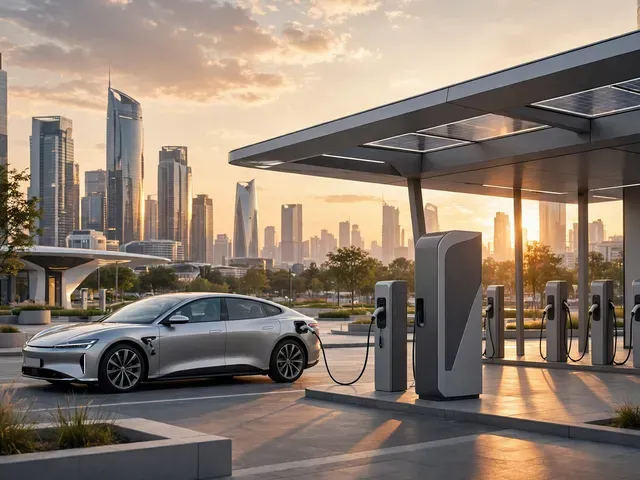
Twenty years ago, electric cars were slow, expensive and could barely cross town before the battery ran flat. Today the picture could hardly be more different. Electric vehicles — EVs for short — sit in ordinary showrooms next to petrol and diesel cars, they win major car-of-the-year awards, and in some countries they already outsell conventional models. What changed, and what does it mean for the way all of us will travel in the years ahead?
From Niche Experiment to the Mainstream
The turning point was not a single invention but several forces arriving together. Governments set dates after which new petrol and diesel cars could no longer be sold, and cities introduced low-emission zones. Carmakers, meanwhile, realised an electric motor is far simpler than a petrol engine — a fraction of the moving parts, no oil changes, and instant, silent power. Early adopters loved it, and word spread.
Competition did the rest. Once a few bold companies proved that people would queue up to buy a good electric car, every major manufacturer rushed to catch up. Billions were poured into new factories, new platforms and new designs built from the ground up around a battery rather than an engine. The result is real choice — from small city hatchbacks to family SUVs and sports cars — at prices edging ever closer to petrol equivalents.
Batteries Changed Everything
If one technology deserves the credit for the EV revolution, it is the battery. The lithium-ion cells that first powered laptops and phones were adapted, enlarged and made dramatically cheaper. Since then, battery costs have fallen by roughly ten times, while range has climbed in the opposite direction. A typical family EV today can travel 350 to 450 kilometres on a single charge — more than enough for a week of commuting for most drivers.
Research has not stopped. New chemistries — including solid-state batteries still in development — promise packs that charge faster, last longer and use fewer scarce materials. Recycling is growing too: old batteries can store solar energy for homes in a second life, and their valuable metals can be recovered and used again.

Charging Is Catching Up
For years the biggest question about EVs was simple: where do you charge one? The honest answer is that most charging already happens in the most convenient place of all — at home, overnight, while the car sits unused. Owners wake up to a full battery every morning and rarely think about fuel at all. For longer journeys, public fast chargers have multiplied along highways and in towns. Modern fast chargers can add a large share of a battery in twenty to thirty minutes, roughly the length of a normal rest stop.
Workplaces, supermarkets and car parks are adding chargers that top up the battery while you get on with your day, and apps show where they are and what they cost. Gaps remain — street parking and rural areas need more — but the network grows every month.
More Than Cars
The electric shift reaches far beyond private cars. City buses are going electric, cutting fumes and noise on busy streets. Delivery vans — predictable routes, back at the depot each night — are ideal for electrification and have been ordered in huge numbers. Electric trucks for longer hauls are arriving too.
Two-wheelers may be the quietest success story of all. Electric scooters and motorcycles are cheap to run and perfect for crowded cities, and in parts of Asia they already number in the millions. Add e-bikes, and the future is clearly a mix of electric options for every kind of journey.
Cleaner Cities, Quieter Streets
The benefits are easiest to feel where people live. An electric vehicle produces no exhaust at the point of use, so streets full of EVs mean cleaner air — a change that matters most for children, older people and anyone with asthma. Electric motors are also far quieter than engines, especially at low speeds, so neighbourhoods become calmer places. And when the electricity itself comes from wind, solar or other renewable sources, the total emissions of driving fall dramatically compared with burning petrol or diesel.
There are honest complications. Batteries require mined materials, and mining must be done responsibly. Grids must grow too — though smart charging, which shifts demand to quiet overnight hours, can turn EVs from a burden into a help, even letting some new cars feed power back to homes during outages.

Challenges That Still Remain
None of this means the transition is finished. Electric cars still cost more upfront than petrol ones, even though they are cheaper to run and maintain over their lifetime. Charging must keep expanding, especially for people without a driveway, and repair networks need to grow alongside sales. The evidence on battery life is encouraging — most packs keep most of their capacity after many years — but these are real problems: the problems of a technology scaling up, not standing still.
What the Future Looks Like
Put the trends together and the direction of travel is clear. Within a few years, most experts expect electric models to make up the majority of new car sales in many markets. Cars will keep getting smarter too: overnight software updates, better driver assistance, and eventually self-driving services in some cities — plus apps that combine a train, an e-bike and a shared electric car into one journey, paid for in a single tap.
Perhaps the biggest change is the simplest one. For a century, getting around has meant burning fuel. The rise of the electric vehicle shows that it does not have to. The future of transportation will be electric, quieter and cleaner — and judging by how far we have come in just a decade, it will arrive sooner than most of us expect.
