Food & Travel
Exploring the World's Most Popular Food Cultures
Every country tells its story on a plate. From slow Sunday sauces in Italy to sizzling night markets in Asia, here is a delicious tour of the food cultures the whole world has fallen in love with.
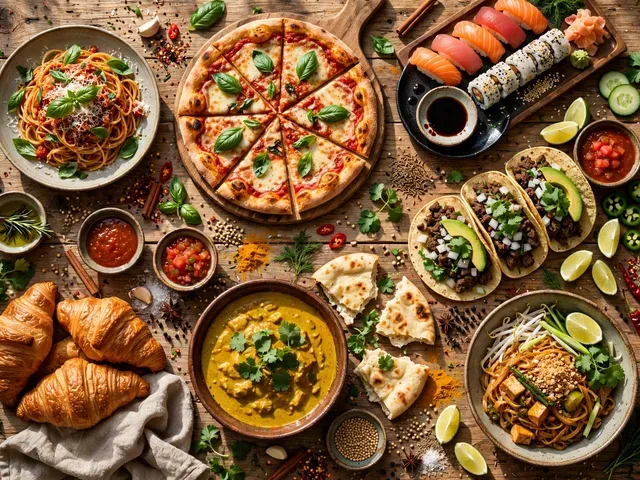
Food is never just food. It is history, geography, family and celebration served together. The dishes a place is famous for usually began with what grew nearby, what traders brought in, and what grandmothers refused to let anyone change. That is why the world's most popular food cultures feel so different from each other, even when they use the same basic ingredients. A tomato in Naples becomes something completely different from a tomato in Mexico City or Mumbai.
Some cuisines have travelled so far that you can find them in almost every big city on earth. Let us take a tasty journey through the food cultures that people everywhere keep coming back to.
Italian Food: Simple Ingredients, Big Feelings
Italian food is probably the most loved cuisine in the world, and its secret is beautiful simplicity. A great pizza needs only good dough, ripe tomatoes, fresh mozzarella and basil. Pasta dishes often have just a handful of ingredients, yet the flavour feels complete. Italians believe in respecting each ingredient instead of hiding it under heavy sauces.
Food in Italy is also about time and togetherness. Meals are rarely rushed. Families gather around long tables, courses arrive slowly, and conversation matters as much as the cooking. Every region guards its own speciality, from rich ragù in Bologna to seafood pasta along the southern coast, so travelling through Italy is like visiting many small food countries in one.

Japanese Food: Balance and Respect
Japanese food culture is built on balance, freshness and presentation. A meal is designed to please the eyes first: colours, shapes and small portions are arranged with real care. Sushi and sashimi celebrate the clean taste of fresh fish, while ramen shows the other side of Japan — a steaming, comforting bowl that can take hours, even days, to prepare properly.
Seasonal eating is central in Japan. Menus change with the months, and chefs train for years to master a single skill, whether it is cooking rice or grilling skewers. The result is a cuisine that feels calm, precise and deeply satisfying.
Mexican Food: Colour, Corn and Celebration
Mexican food is joyful food. Built on corn, beans, chillies, tomatoes and lime, it is bright in both colour and flavour. Tacos alone could fill a lifetime of eating — soft or crispy, filled with grilled meat, fish, vegetables or slow-cooked stews, and always finished with salsa, onion and coriander.
What makes Mexican cuisine special is its depth. Ancient techniques, like grinding corn and making complex mole sauces with dozens of ingredients, sit comfortably beside lively street food. Meals are social and generous, meant to be shared at markets, festivals and family tables where nobody is in a hurry to leave.
Indian Food: A World of Spice
Indian food is not one cuisine but hundreds, shaped by region, religion and climate. The north is famous for creamy curries, tandoor-baked breads and slow-cooked lentils. The south offers crisp dosas, coconut-based dishes and fiery flavours served on banana leaves. Everywhere, spices are used like an artist uses paint — layered carefully to build warmth, aroma and depth rather than just heat.
India also has one of the world's richest vegetarian traditions, proving that vegetables, lentils and grains can be every bit as exciting as meat. A simple thali, with many small dishes served together, is a perfect introduction: sweet, sour, spicy, crunchy and soft, all in a single meal.

French and Mediterranean Food: The Art of Enjoying
French cuisine gave the world many of its cooking techniques, from sauces and stocks to delicate pastries. Croissants, coq au vin, ratatouille and crème brûlée show its range, from rustic farmhouse cooking to elegant fine dining. The French lesson is simple: take eating seriously, buy the best ingredients you can, and never skip dessert.
Around the Mediterranean, food culture is tied to a way of life. Olive oil, grilled fish, fresh vegetables, herbs, bread and shared mezze plates appear from Greece and Turkey to Spain and Lebanon. Meals stretch over hours, plates are passed around, and good health feels like a happy side effect of enjoying food with people you love.
Thai Food and the Magic of Street Food
Thai food is a masterclass in balance — every dish plays sweet against sour, salty against spicy. Pad Thai, green curry and tom yum soup are famous worldwide, but Thailand's real treasure is its street food. In Bangkok, some of the best meals of your life come from a small cart, cooked in seconds over fierce heat and eaten on a plastic stool.
Street food culture thrives across Asia, from night markets in Taiwan and China to hawker centres in Singapore. It is affordable, fast and full of character, and it keeps traditional recipes alive by serving them to everyone, every single day.
Why Food Cultures Bring Us Together
The world's most popular food cultures became popular for a reason. They are generous, full of flavour and built around sharing. When we eat another country's food, we learn a little of its history and values without opening a single book. A bowl of ramen teaches patience. A shared mezze teaches generosity. A family pasta night teaches that the best ingredient is time spent together.
So keep exploring, one plate at a time. Try the dish you cannot pronounce, accept the extra helping, and ask for the story behind the recipe. The world is a very big table — and there is a seat waiting for everyone.
