The Future of Renewable Energy Around the World
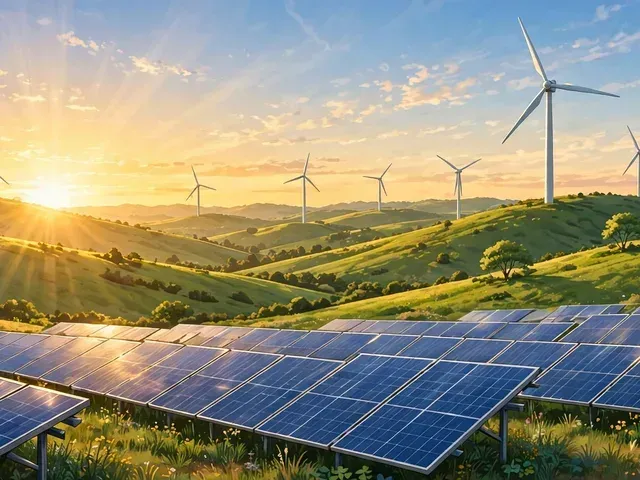
What if the cheapest electricity in human history also turned out to be the cleanest? That is no longer a hopeful daydream. In most parts of the planet, building a brand-new solar or wind farm now costs less than simply running an old coal plant — and that one fact is quietly deciding the future of renewable energy around the world.
Whether you pay an electricity bill, run a small business, or just worry about the air your children breathe, this shift touches your life. Prices, jobs, and even the weather over our farms are tied to how quickly clean power grows.
Why the Future of Renewable Energy Around the World Looks So Different Now
A decade ago, renewable energy was treated as a nice extra — something rich countries added when budgets allowed. Today it is the main event. Solar panels have become far cheaper to make, wind turbines have grown taller and stronger, and batteries that once cost a fortune now fit into ordinary homes.
Governments have noticed, and companies are racing to build because clean power is now good business, not just good publicity. The result is a global building boom that shows no sign of slowing down.
Three forces are driving it:
- Falling costs — sunlight and wind are free, and the machines that harvest them keep getting cheaper.
- Energy security — countries would rather make their own power than depend on imported fuel.
- Public demand — families everywhere want lower bills and cleaner air.
Solar Power: From Rooftops to Giant Desert Parks
Solar is the fastest-growing energy source on Earth, and it is easy to see why. A panel has no moving parts, makes no noise, and works anywhere the sun shines — which is almost everywhere people live. On a family rooftop it quietly cuts the monthly bill. Spread across a desert, it can power an entire city.

Some of the largest solar parks now sit in the deserts of India, China, the Middle East, and the American Southwest. Meanwhile, millions of households have become tiny power stations, selling spare electricity back to the grid. Solar is big when it needs to be, small when it doesn't.
Wind Energy Blows Far Beyond the Coast
Wind power has had its own quiet revolution. Modern turbines stand taller than many skyscrapers, and a single sweep of their blades can power a home for a day. Wind farms now supply a large share of electricity in countries like Denmark, Spain, and parts of the United States.
The newest frontier is the sea. Offshore wind farms catch stronger, steadier winds than land ever offers, and floating turbines are opening up even deeper waters. Countries with long coastlines — from Britain to Japan — can now tap an enormous supply of clean power close to home.
The Storage Puzzle Is Finally Being Solved
For years, critics asked a fair question: what happens when the sun sets and the wind calms down? The answer, increasingly, is batteries. Giant battery installations now store sunny afternoon electricity and release it during the busy evening hours, exactly when families cook, cool their homes, and charge their cars.
Storage is getting creative, too. Excess power is used to make green hydrogen for factories and ships, and smart software shifts demand to the hours when clean energy is plentiful. The grid of the future will not just generate power — it will juggle it intelligently.
Green Cities and Everyday Energy

Perhaps the most exciting changes are the ones you will see on your own street. Buildings are sprouting rooftop panels and garden-covered walls that cool the air naturally. Electric buses glide quietly past cyclists, and charging points are appearing in parking lots, offices, and apartment blocks.
Heat pumps are replacing gas boilers, and apps now tell you the cheapest, cleanest hour to run your washing machine. Clean energy is leaving the power station and moving into daily life — one home, one street, one city at a time.
Simple Steps You Can Take, Starting This Week
You do not need a rooftop or a big budget to be part of this future. Small choices, repeated by millions, move markets fast. Here are five worth trying:
- Check your tariff. Many providers offer a green plan that costs the same — or less — than the standard one. Switching takes ten minutes online.
- Cut the waste first. LED bulbs, a well-sealed home, and switching off standby power shrink your bill before you generate a single unit.
- Time your usage. Run the washing machine when the sun is shining or the wind is blowing — usually midday or late at night.
- Start small with solar. A balcony panel, a solar water heater, or a community solar subscription is a gentle first step.
- Spread the word. Tell a neighbour what worked for you. Most people adopt clean energy because someone they trust already has.
Quick Recap
- Renewable energy is now the cheapest new power in most of the world.
- Solar leads the growth, from family rooftops to desert mega-parks.
- Wind is moving offshore, where floating turbines unlock deeper waters.
- Batteries and smart grids are solving the old storage problem.
- Cities and homes are becoming part of the energy system themselves.
- Your own choices — tariffs, timing, and small savings — genuinely help.
The future of renewable energy around the world is not a distant promise anymore; it is being built right now, panel by panel and turbine by turbine. Those who join early will enjoy the cheapest bills and the cleanest air. The best part? There is room for everyone under the sun.
So, over to you: which of these changes would you most like to see on your own street — rooftop solar, cleaner buses, or lower bills first? Tell us in the comments. And if you know someone who is curious about going green but doesn't know where to start, share this post with them — it might be the nudge they were waiting for.

No comments:
Post a Comment