How Social Media Is Influencing Modern Society
It shapes how we meet, learn, shop, argue, and see ourselves — often in ways we barely notice until we step back and look.
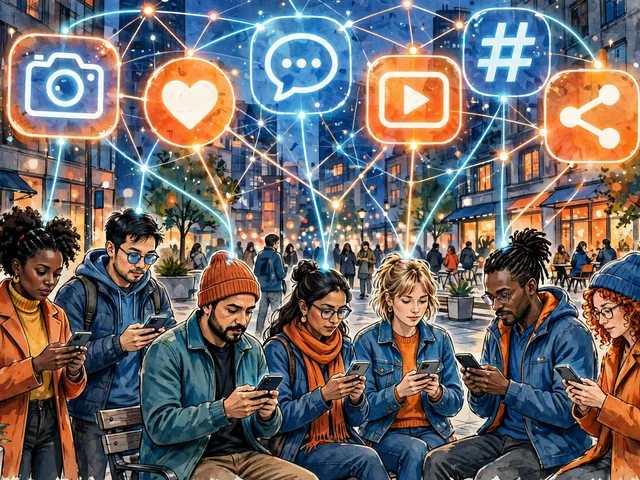
For many of us, the day now begins and ends with a scroll. Before breakfast, we have already checked messages, watched a short video, reacted to a friend's photo, and glanced at the news. Social media is no longer just an app we open for fun. It has become a place where friendships are maintained, businesses are built, opinions are formed, and identities are expressed. Understanding its influence is not about blaming technology — it is about seeing clearly how it is reshaping modern society, for better and for worse.
How We Connect Has Changed Completely
Distance used to decide who we stayed close to. Today, a grandparent in a village can video-call grandchildren in another country, old school friends can find each other after twenty years, and strangers with the same rare hobby or health condition can support each other daily. Social platforms have made connection instant and constant. That is a genuine gift, especially for people who feel isolated where they live.
At the same time, the nature of connection has changed. A like is quicker than a conversation, and a story that disappears in 24 hours is easier than a visit. We can feel surrounded by people and still feel lonely, because being in touch is not always the same as being known. Many relationships now live in a middle space — more frequent, but sometimes shallower — and learning to protect real, face-to-face time has become an important life skill.

News, Opinions, and Public Life
Social media has also changed how society talks to itself. News breaks on feeds before it reaches television, and ordinary people can share a video that reaches millions in hours. Movements for justice, relief efforts after disasters, and small local causes have all found a voice and an audience this way. In that sense, social media has given power to people who once had no platform.
The other side is speed without checking. False stories, edited clips, and angry opinions often travel faster than careful facts, because outrage is engaging. Algorithms tend to show us more of what we already agree with, so two neighbours can live in completely different information worlds. The result is a society that is louder and more polarised, where pausing to verify before sharing has become a civic responsibility, not just good manners.
Work, Business, and Opportunity
For work and business, the influence is just as deep. A home baker, a tailor, or a freelance designer can now reach customers far beyond their street, build trust with regular posts, and sell without a shop. Personal branding matters for jobs too — employers look at profiles, and professionals build reputations in public. Social media has lowered the cost of starting something, and that has opened doors for young people and small creators everywhere.
But it has also blurred the line between work and rest. When your business lives on your phone, the shop never really closes. Creators feel pressure to post constantly, compare their numbers with others, and turn even holidays into content. Opportunity and exhaustion often arrive together.
Mental Health and Self-Image
Perhaps the most personal influence is on how we feel about ourselves. Feeds are full of highlights — good looks, success, travel, and celebration — rarely the ordinary or difficult parts of life. Comparing our behind-the-scenes with everyone else's best moments can quietly lower confidence, especially for teenagers. Constant notifications also fragment attention, making deep focus and even boredom — which the mind needs — harder to find.
Yet the same platforms can help. Many people find honest communities around anxiety, grief, parenting, or recovery, and mental-health awareness has grown because people speak openly online. The tool is not simply good or bad; the effect depends on how we use it, whom we follow, and whether we can put it down.
A simple balance check: Does scrolling leave you informed, connected, and calm — or tired, envious, and restless? Your answer after 20 minutes tells you more than any screen-time number.

Culture, Language, and Everyday Habits
Trends in music, fashion, food, and humour now spread worldwide in days. A dance, a recipe, or a phrase can cross languages overnight, creating a shared global culture — especially among the young. Local traditions get new audiences too, as creators document festivals, crafts, and regional food for the world. At the same time, attention spans and language itself are shifting, with shorter formats rewarding what is catchy over what is thoughtful.
Finding a Healthier Balance
Social media is not going away, and society will keep adapting to it. The goal is not to quit in frustration, but to use it deliberately:
- Follow accounts that teach, encourage, or genuinely entertain you — and mute those that only make you compare.
- Check a source before sharing news, especially when a post makes you very angry or very excited.
- Keep some phone-free time every day — meals, walks, and the hour before sleep are good places to start.
- Invest in offline friendships and hobbies; let social media support real life, not replace it.
In the end, social media is a mirror and a megaphone: it reflects what society values and amplifies it. If we bring curiosity, kindness, and a little self-control to our feeds, the influence can tilt toward connection and opportunity. The technology will keep changing — how thoughtfully we use it is still up to us.

No comments:
Post a Comment